Brain mapping
What a qEEG Actually Measures
A qEEG (quantitative EEG) records the electrical activity your brain produces every second and breaks it into frequency bands. A 20-minute Freedom20R session gives us a real, measurable baseline - not a guess.
Five Brainwave Bands We Read

Delta 0.5 - 4 Hz
Deep, restorative sleep and unconscious repair.

Theta 4 - 8 Hz
Drowsiness, deep relaxation, the edge of daydreaming.

Alpha 8 - 12 Hz
Calm, relaxed alertness - resting between activity and rest.

Beta 12 - 30 Hz
Active thinking, focus, and problem-solving.

Gamma 30+ Hz
High-level processing, learning, and integration.
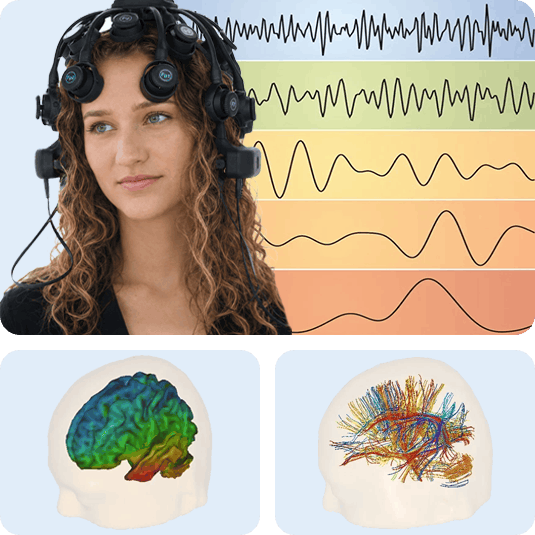

Your qEEG shows which of these bands are overactive, underactive, or poorly coordinated in specific regions - then compares your results to an age-matched normative database. That's what turns a recording into a personalized protocol.
Cognitive Decline Assessment
Don’t Just Test How You Think. See How Your Brain Responds.
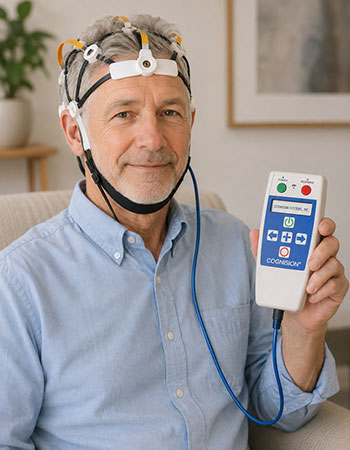
The COGNISION® System gives us an objective look at how the brain is functioning by measuring electrical activity through EEG and Event-Related Potential (ERP) testing. While traditional cognitive testing often relies on questions and performance alone, COGNISION® measures the brain’s physiological response as it processes sounds and information, providing valuable insight into attention, working memory, processing speed, executive function, reaction time, and auditory processing.Because hearing plays such an important role in how the brain receives and processes information, we also evaluate hearing as part of the assessment to help distinguish hearing-related difficulties from changes in cognitive processing. Together, these measurements can help establish an objective baseline of cognitive function, identify patterns of cognitive change, and better understand where someone may be along the spectrum from healthy aging to more significant cognitive impairment. Knowing where you stand gives you and your healthcare team valuable information to take action earlier, personalize brain-health strategies, and measure changes and progress over time.
Neurofeedback
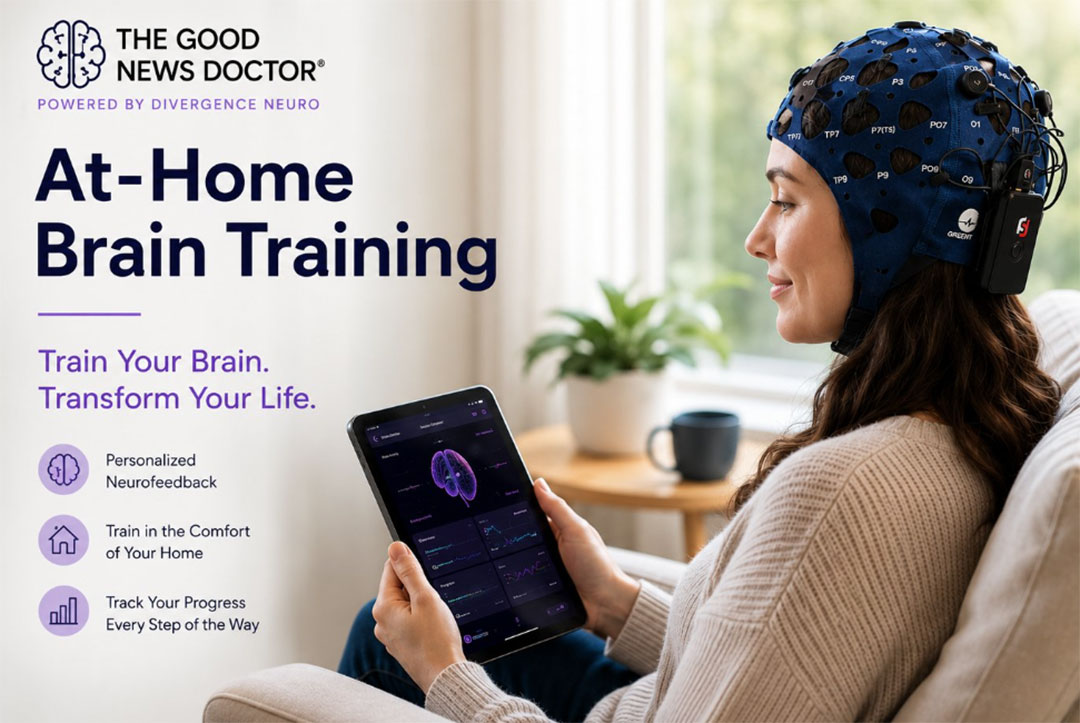
At-home brain training
What is Neurofeedback?
Neurofeedback uses real-time EEG signals as feedback during training. The goal is to help you practice patterns of self-regulation, while your care team reviews training data and adjusts your program as appropriate.
It's a non-invasive, drug-free way to work with your brain's own activity - turning what's normally invisible into something you can see, respond to, and train.
Neurofeedback is not a substitute for emergency care or individualized medical advice. Results and experiences vary.
Your Home Setup
- Wear the lightweight cap and sensors as instructed.
- Open your assigned session in the mobile app.
- Complete the guided training from a comfortable space.
- Your provider can review progress and session data.
Why Neurofeedback?
What Brain Training Can Support
Neurofeedback works with your brain's own patterns to support goals like these - as part of a program guided by your care team.

Improved Focus & Attention
Supports sharper concentration and less mental fog throughout the day.

Stress & Emotional Regulation
Trains the nervous system toward calmer, steadier responses to stress.

Healthier Sleep Patterns
Many patients pursue neurofeedback to support more restful, consistent sleep.

Post-Injury Recovery Support
Used alongside care plans to support the brain's recovery after concussion or injury.

Greater Self-Awareness
Seeing your own brain activity in real time builds insight into your patterns.

Personalized to Your Brain
Every plan is built from your own brain map — not a generic protocol.
Why Train at Home?
Consistency Matters
A remote setup can make it easier to complete assigned sessions without adding another commute to your week.
Flexible
Complete assigned sessions in your own space.
Connected
Your provider can review data and progress remotely.
Personalized
Training protocols are created based on your brain map.
Portable
Dry, wireless sensors support a streamlined home setup.
Platform features include mobile access, assigned training sessions, progress tracking, assessments, and optional live session streaming.
How Your Program Works
Simple Routine. Meaningful Feedback.
Get Set Up
We orient you to the cap, sensors, app, and your assigned training plan.
Train at Home
The mobile app guides you through the neurofeedback sessions assigned by your provider.
Track Progress
Session data and assessments can be reviewed over time to help inform your care plan.
Stay Supported
Depending on your program, your provider may review sessions remotely or join a live session.
Innovative Technology
Easy-to-Use Technology
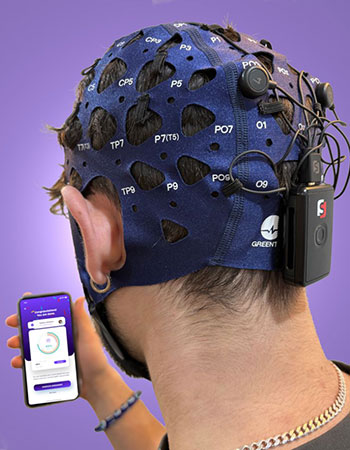
A compact EEG/ECG device
- 4 EEG sensors with flexible placement
- 1 ECG sensor for measures such as HRV
- Dry, Bluetooth wireless setup - no gel
- Lightweight, portable case
Join Waitlist
